Hey there! I’m a supplier of PVP complex compounds. You might be wondering, "What the heck are the electronic structures of PVP complex compounds?" Well, let’s dive right into it. PVP Complex Compound

Understanding PVP
First off, let’s talk a bit about PVP. PVP stands for polyvinylpyrrolidone. It’s a water – soluble polymer that has a whole bunch of applications. You can find it in stuff like pharmaceuticals, cosmetics, and even in some industrial processes. PVP has this really cool structure. Its repeating unit has a five – membered lactam ring. This ring is what gives PVP some of its unique properties.
The Basics of Electronic Structure
At the most basic level, the electronic structure of a molecule tells us how the electrons are arranged around the atoms. For PVP complex compounds, this is crucial because it affects how the compound behaves chemically and physically.
In PVP, the carbon and nitrogen atoms in the lactam ring have different electronegativities. Electronegativity is just a measure of how strongly an atom attracts electrons. Nitrogen is more electronegative than carbon. So, in the C – N bonds within the lactam ring, the electrons are pulled a bit more towards the nitrogen atom. This creates a partial negative charge on the nitrogen and a partial positive charge on the carbon.
PVP Complex Formation
When PVP forms a complex compound, it usually does so with other molecules or ions. For example, it can form complexes with metal ions. The way it binds to these metal ions is really interesting from an electronic structure perspective.
The lone pairs of electrons on the nitrogen atom in the lactam ring play a big role here. These lone pairs can be donated to the metal ion. In a way, it’s like the nitrogen atom is sharing some of its electrons with the metal. This forms a coordinate covalent bond.
Let’s say we’re looking at a PVP complex with a copper (II) ion, Cu²⁺. The nitrogen atoms in the PVP molecules surround the copper ion. The lone pairs on the nitrogen atoms are attracted to the positively charged copper ion. The copper ion has empty orbitals that can accept these electron pairs. This sharing of electrons changes the electronic environment around both the PVP and the copper ion.
Impact on the Overall Electronic Structure
Once the complex is formed, the overall electronic structure becomes a combination of the PVP’s electronic structure and that of the guest molecule (in this case, the metal ion). The electron density distribution in the complex is different from that in the individual components.
For instance, the metal ion can polarize the PVP molecule even more. The positive charge on the metal ion can pull the electrons from the PVP molecule towards itself. This can cause changes in the bond lengths and bond angles within the PVP. The carbon – nitrogen and carbon – carbon bonds in the lactam ring might get a bit distorted.
This change in electronic structure has some real – world implications. It can affect the solubility of the complex. A PVP – metal ion complex might be more or less soluble in water depending on the electronic changes. It can also influence the reactivity of the complex. For example, the complex might be more or less likely to react with other chemicals than the individual PVP or the metal ion.
Role of Solvent
The solvent in which the PVP complex is formed also has an impact on the electronic structure. When the complex is in water, water molecules can interact with the complex. Water is a polar molecule, and it can form hydrogen bonds with the PVP.
The oxygen atom in water has a partial negative charge, and it can interact with the partially positive carbon atoms in the PVP. The hydrogen atoms in water, which have a partial positive charge, can interact with the lone pairs on the nitrogen atoms in the PVP.
When a complex is formed in water, these solvent – complex interactions can further modify the electronic structure. They can either stabilize or destabilize the complex. For example, if the water molecules interact strongly with the PVP part of the complex, it might make the complex less likely to dissociate.
Applications and the Electronic Structure
The electronic structure of PVP complex compounds is directly related to their applications. In the pharmaceutical industry, PVP complex compounds can be used to improve the solubility of drugs. The way the drug molecules interact with the PVP in a complex (through changes in electronic structure) can make the drug dissolve better in water. This is super important because many drugs need to be soluble in water to be absorbed by the body.
In cosmetics, PVP complex compounds can act as stabilizers. The electronic interactions within the complex help keep the different components of the cosmetic product mixed together. The complex can prevent ingredients from separating over time.
Why Our PVP Complex Compounds Rock
As a supplier of PVP complex compounds, I can tell you that we’ve put a lot of work into getting the electronic structures just right. We’ve done countless experiments to optimize the conditions for complex formation.
We’ve found the perfect balance of reaction conditions, like temperature, pressure, and the ratio of PVP to the guest molecule. This ensures that the electronic structure of our complex compounds is what’s needed for the specific applications our customers have.
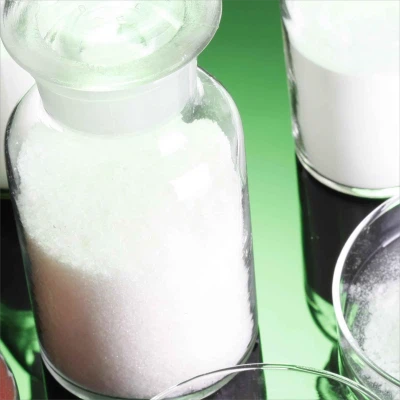
Whether you need a PVP complex for a pharmaceutical formulation or a cosmetic product, our compounds are designed to have the ideal electronic properties. They’ll give you the solubility, stability, and reactivity you’re looking for.
Let’s Talk Business
NVP Copolymer If you’re in the market for high – quality PVP complex compounds, I’d love to chat with you. We can discuss your specific needs and how our products can fit into your processes. Whether you’re a small – scale startup or a large – scale manufacturer, we’ve got the right PVP complex compounds for you. So, don’t hesitate to reach out if you’re interested in making a purchase. We’re here to help you find the best solutions for your business.
References
- Carlesso, N., Pasquato, L., & Scrimin, P. (2002). Metal – ion complexes with poly(N – vinyl – 2 – pyrrolidone). Progress in Polymer Science, 27(5), 903 – 957.
- Chiellini, E., Cinelli, P., Chiellini, F., & Solaro, R. (2007). Interactions between proteins and poly(vinylpyrrolidone): From fundamental studies to practical applications. Progress in Polymer Science, 32(8 – 9), 787 – 814.
- Ganicz, J., & Rosiak, J. M. (2006). Radiation – induced synthesis of PVP–Ag nanocomposites from silver lactate solutions. European Polymer Journal, 42(10), 2588 – 2592.
Hangzhou Rainbow Import & Export Co., Ltd.
Hangzhou Rainbow Import & Export Co., Ltd. is one of the leading pvp complex compound manufacturers and suppliers in China. We warmly welcome you to buy high-grade pvp complex compound from our factory. All customized products are with high quality and competitive price. For free sample, contact us now.
Address: 3-405 B, Xi Gang Xing Jie No.206 Zhenhua Road,San Dun, Xihu District, Hangzhou, Zhejiang, China
E-mail: lisa@cpvp.com.cn
WebSite: https://www.sunvidone.com/
