If you’ve ever stared at a power supply schematic, picking through rows of resistors, capacitors, and diodes, you might have glossed over that two-part coil labeled “common mode inductor” like it’s just another unremarkable component. As someone who’s spent the last 12 years designing and manufacturing these exact parts—first as an engineer testing prototypes, now as a lead at a common mode inductor supplier—I can tell you that overlooking this small component is a costly mistake. Power supply failures aren’t just about overheating or short circuits; most of the time, they’re driven by noise that’s invisible to the naked eye, and the common mode inductor is the unsung hero that keeps that noise from breaking your circuit. Common Mode Inductor
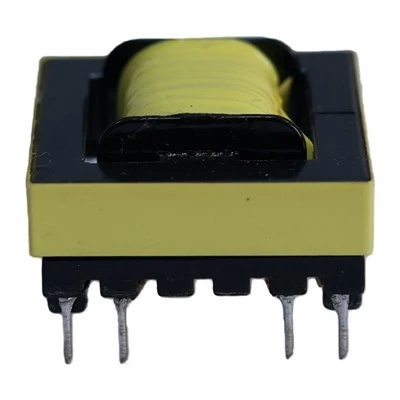
Let’s start with the basics, because you can’t fix what you don’t understand. When we talk about noise in power supplies, there are two types that plague every circuit: differential mode noise and common mode noise. Differential mode is the familiar kind: it travels along the two signal or power lines, equal and opposite, and cancels itself out once it hits a load or ground. You’ve seen its effects if your audio system has a hum when it’s near a power cable, or if your laptop screen flickers next to a phone charger—that’s differential noise messing with the signal path. But common mode noise? That’s the silent saboteur most people miss. It’s the noise that travels along both lines at the same time, in the same direction, all tied to a shared ground reference. It comes from switching circuits: when a power supply’s MOSFET turns on and off thousands of times a second, it creates rapid voltage changes that leak into the surrounding environment as electromagnetic interference (EMI). That EMI couples to every wire in your device, including your power lines, so now you have unwanted voltage popping up equally on both lines relative to ground.
If that common mode noise isn’t stopped, it doesn’t just mess with audio or video—it can cause your microcontroller to misread data, your power adapter to overheat, or even fail emissions tests when you’re selling a consumer device. Here’s where the common mode inductor does its work. Unlike a regular inductor, which is just a coil of wire wrapped around a core, a common mode inductor has two identical coils wound around the same ferrite core. That symmetry is key. When normal, intended current flows through the power lines—current that’s equal and opposite, differential mode—the magnetic fields created by each coil cancel each other out. The core doesn’t saturate, the inductor doesn’t react, and your actual power signal keeps moving without any interference. That’s exactly what you want, because you don’t want your component slowing down or altering the power you designed your circuit to deliver.
Now, when that common mode noise hits? It’s equal in magnitude and direction on both lines, so both coils create magnetic fields that add up, not cancel. The ferrite core, which is made of a material engineered to resist changing magnetic fields at specific frequencies, pushes back against that combined magnetic field. That’s the inductive reactance doing its job: it acts like a high-value resistor only for the noise, converting the electromagnetic energy of the common mode interference into heat that dissipates harmlessly, not into your circuit.
Let’s ground this in a real-world example, because theory is great, but I’ve seen this play out in hundreds of customer projects. Last year, we worked with a team that was designing a new line of compact wall adapters for smart home devices. They were testing their first prototype, and every unit failed the CISPR 22 emissions test—meaning the common mode noise was radiating out of the adapter beyond legal limits. The engineering team tried everything: adding more capacitors, moving the components farther apart, even shielding the adapter’s case. Nothing worked. When they came to us, we asked them about their current common mode choke selection, and it turned out they were using a generic through-hole part off the shelf, not an optimized common mode inductor for their frequency band.
We swapped in our custom surface-mount common mode inductor, rated for their operating frequency of 100kHz to 10MHz, paired with a matched set of X2 capacitors for differential noise. The next round of prototypes passed emissions testing on the first try. Why? Because our inductor’s ferrite core was tuned specifically to that range of common mode noise generated by switching wall adapters, and the tight winding tolerance meant the magnetic fields canceled perfectly for differential current, so the adapter didn’t waste extra power heating up the core. That’s the difference between a generic part and one designed for the exact job your power supply needs.
A common mode inductor’s performance isn’t just about the core material, either. The number of turns in the coils, the wire gauge, the inductance rating—all of these matter, and they’re not one-size-fits-all. For a high-current power supply for a server, you need a common mode inductor with thick wire to handle 10 or 20 amps without overheating, and a core that can handle the magnetic field from that high current without saturating. For a tiny Bluetooth module’s power supply, you need a miniature surface-mount common mode inductor that’s small enough to fit on a 0201 footprint, with inductance tuned to block the high-frequency noise from the module’s radio.
That’s why, at our facility, we don’t just sell standard common mode inductors. We work with customers to tailor every part to their power supply’s specific needs, because a part that works for a consumer smartphone won’t work for a industrial motor drive or a medical device, where noise can be a safety hazard as much as a performance issue. For medical power supplies, for example, common mode noise is a major concern because it can cause interference with heart monitors or other diagnostic equipment. We’ve designed common mode inductors for medical applications that meet ISO 10601 standards, with ultra-low leakage current and strict temperature stability, so the power supply is both efficient and safe.
Another key role common mode inductors play is protecting sensitive circuits from external noise, too. It’s not just the noise your own power supply generates—it’s the noise coming from other devices nearby. If you’re building a device that has to operate in a noisy environment, like a factory floor or a busy office, the common mode inductor blocks that external EMI from getting into your power lines and messing with your microcontroller or sensors. That’s a role that’s easy to forget when you’re focused on the power supply’s internal performance, but it’s the reason many industrial sensors work reliably even in spaces full of motors and transmitters.
I’ve heard engineers argue that with the rise of advanced semiconductor filters, common mode inductors are becoming obsolete. That’s a myth I hear all the time, and it’s one I’ve seen proven wrong time and again. Semiconductor filters can handle differential noise, but common mode noise requires that magnetic symmetry only a common mode inductor can provide. Capacitors alone can’t block common mode noise because common mode voltage is relative to ground, so a capacitor would just conduct that noise to ground instead of stopping it. The common mode inductor is the only component that rejects common mode noise without wasting power on the actual current your circuit needs.
Let’s talk about efficiency, because that’s a big deal for every power supply designer. A good common mode inductor has low DC resistance, so it doesn’t add extra heat to your power supply, which improves overall efficiency. That’s critical for battery-powered devices, where every milliwatt of power saved extends battery life, and for high-power supplies where heat means you need larger, more expensive cooling systems. When we test our common mode inductors, we measure their insertion loss—how much they reduce the actual power signal—and most of our parts have insertion loss of less than 0.1dB at rated current. That means you barely even notice the component is there, until you need it to block noise.
So why should you care about choosing the right common mode inductor, not just any part? I’ve seen too many engineers cut corners on this component, only to face costly redesigns, delayed product launches, or compliance fines. A client last quarter told us they’d spent $50,000 redesigning a line of power tools because they’d used a cheap common mode inductor that caused the power supply to fail safety tests. Once they switched to our optimized common mode inductor, the redesign took two weeks, and they saved thousands of dollars in retooling costs.
If you’re designing a power supply, or troubleshooting one that’s failing due to noise, the common mode inductor is the first place you should look. It’s not just a component on a schematic—it’s the part that keeps your power signal clean, blocks harmful interference, and ensures your device works reliably, whether it’s a smartphone, a server, a medical device, or an industrial sensor.
As a supplier focused exclusively on common mode inductors, we know that every project is different. We’ve designed parts for applications ranging from small wearables to 100kW industrial power supplies, and we test every component to ensure it meets your exact specifications—whether that’s high current, tight footprint requirements, compliance with global standards, or tuned performance for your specific frequency band.
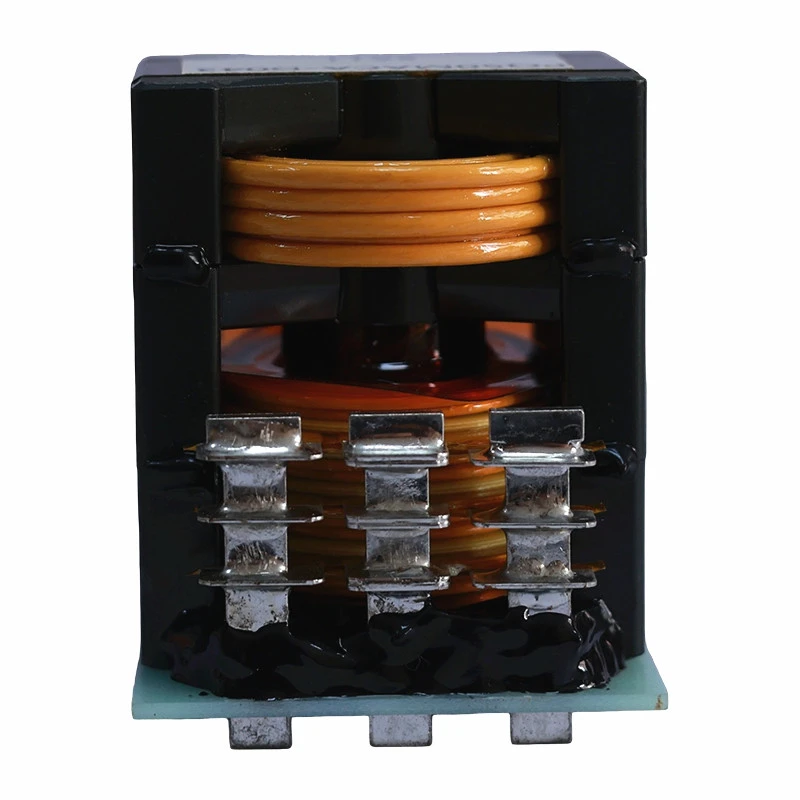
If you’re struggling with noise in your power supply, or you want to optimize your design for efficiency and compliance, we’re here to help. Our team of engineers works directly with designers to select or customize the right common mode inductor for your project, no generic off-the-shelf parts that don’t fit your needs. Reach out to us to discuss your power supply requirements, and let’s make sure your common mode inductor is the unsung hero your circuit needs, not the afterthought you overlooked.
Transformer References
- IEEE Standards Association. (2018). IEEE Std 1595-2018: Standard for Electromagnetic Compatibility of Power Supplies and Associated Equipment.
- O’Donnell, T. (2012). Electromagnetic Compatibility Engineering for Power Supplies. Wiley-IEEE Press.
- Ferrotec Corporation. (2021). Ferrite Core Materials for Common Mode Inductors: Frequency and Saturation Characteristics. Technical Report 21-007.
- CISPR International. (2020). CISPR 22: Information Technology Equipment – Radio Disturbance Characteristics – Limits and Methods of Measurement.
Dongguan Hensiron Electric Co., Ltd.
As one of the most professional common mode inductor suppliers in China, we have world-leading production equipment and strong manufacturing capabilities. Please feel free to buy high quality common mode inductor made in China here from our factory. Customized orders are welcome.
Address: Building 4, Xinxing Industrial Zone, Wangao Road, Wanjiang Street, Dongguan City, China
E-mail: jessica@dghensiron.com
WebSite: https://www.dghensiron.com/
