As a custom colored PVC film supplier, I get asked a lot of unexpected questions, but one that’s popped up more times in the last year than I’d anticipated is: “Is custom colored PVC film slippery?” It’s not the first thing most people think about when they’re sourcing colored PVC for a project—they’re usually focused on color accuracy, durability, maybe how it cuts or forms for their application. But for the industries that rely on our film, that slip resistance question can make or break a product. Whether you’re making safety gear, transport packaging, automotive interior components, or even consumer goods like yoga mats, how a surface grips or slides matters a lot more than you might realize. Let me break this down, not just as someone who sells PVC film, but as someone who’s worked with this material for over a decade and has done the testing to back up every claim. Custom Colored PVC Film
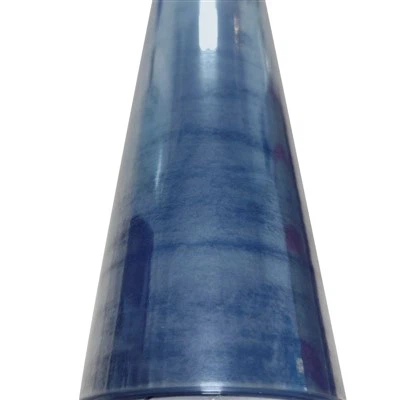
First, let’s start with the basics: what makes any surface slippery? Most people associate “slippery” with smoothness, but that’s only part of the story. Slip resistance is measured by coefficient of friction (CoF), a standard value from 0 to 1 (or higher, depending on testing methods) that tells you how much force it takes to slide one surface over another. A CoF of 0.5 or lower is generally considered low-slippage, meaning surfaces will slide easily; anything above 0.6 is categorized as high-slippage, or anti-slip. That’s the industry standard we reference every day when we’re adjusting our film formulations. Now, custom colored PVC film is a broad category—there’s no one-size-fits-all answer here, because the properties of the film change drastically based on what it’s made for.
Let’s talk about what PVC film is, chemically. Polyvinyl chloride (PVC) is a polymer that, on its own, is naturally smooth and has a relatively low CoF when unmodified. But that’s where the customization part comes in—this is where color, additives, and processing steps all play a role. When a customer comes to us asking for custom colored PVC film, we don’t just mix pigment into the resin and call it done. We adjust the plasticizer content, add slip agents, anti-slip additives, and sometimes texture the surface during extrusion, all while matching their exact color code. That’s why two custom colored films, even with the same base color, can have completely different slip properties depending on their intended use.
Let’s take a common example: custom colored PVC film for conveyor belt liners in a manufacturing plant. A few years back, a food processing company reached out to us because their standard clear PVC liner was too slippery, causing packaged food boxes to slide too fast and jam on the line. They needed a navy blue custom PVC film that was bold enough for their brand, but also grippy enough to keep boxes in place. What we did for them was add a specialized anti-slip additive during the extrusion process—usually something like micro-sized silica or ethylene bis-stearamide (EBS), which is safe for food contact. Those little particles protrude slightly from the film’s surface, creating tiny ridges that increase friction with the bottom of the cardboard boxes. We also adjusted the plasticizer level a tiny bit to make the film more flexible, which further improved grip. The result was a CoF of 0.78 on a dry surface, well above the anti-slip threshold, and the color matched exactly what their design team had specified. That’s a perfect example of how customization directly solves the slipperiness issue.
But wait—what about customers who actually want a slippery custom colored PVC film? Not every application needs grip. For example, a furniture manufacturer might want a light gray PVC film for the back of a sofa cushion, where they don’t want the cushion to stick to the wooden frame. Or a brand making medical device packaging, where the film needs to slide easily into a blister pack without catching. In those cases, we’d use a slip agent like erucamide, a fatty acid amide that migrates to the surface of the PVC over time, creating a lubricious layer. We’d also use a smooth processing roll during extrusion to keep the film’s surface perfectly flat, no texture added. That film would have a CoF of around 0.35, which is noticeably slippery—exactly what the customer needed. So the answer to “is custom colored PVC film slippery?” isn’t a yes or no—it’s it depends on how we customize it.
I’ve also had customers come to me surprised that color affects slipperiness. Let’s clear that up: pigment itself rarely changes the CoF significantly, but some color additives do. For example, if a customer is using a dark pigment like carbon black, it can sometimes interact with anti-slip additives. Carbon black particles are larger and denser than other pigments, so they can fill in the tiny surface ridges we add for grip, reducing friction slightly. That’s not a flaw in the pigment—it’s just a chemical interaction we have to account for. Last year, a customer wanted a matte black custom colored PVC film for anti-slip shoe soles, and when we first tested the formulation with standard carbon black, the CoF was too low. We adjusted the ratio of anti-slip silica to compensate for the carbon black, and ended up with a CoF of 0.72, perfect for their needs. That’s the kind of fine-tuning that comes with being a custom supplier—we don’t just offer pre-made stock; we adjust every variable to meet the customer’s requirement.
Another common misconception is that PVC film gets more slippery when wet. That’s true for many smooth surfaces, but not for all custom colored PVC films. For outdoor applications, like waterproof covers or boat fender liners, we can formulate the film to have hydrophobic properties, meaning it repels water. A hydrophobic custom colored PVC film will maintain its CoF even when exposed to rain or moisture, because water beads up on the surface instead of forming a thin layer that reduces friction. For indoor applications like floor mats for restaurants, we make films that are hydrophilic in a controlled way—they absorb small amounts of water to prevent slipping, but don’t get sticky. We test all of our films under simulated use conditions: dry, wet, even after exposure to oil or cleaning chemicals, to make sure the slip resistance stays consistent. Last year, a chain of fast food restaurants ordered 50,000 square feet of custom red PVC film for their floor mats, and they told us after six months of use, the mats still had the same grip as the day they were installed. That’s a testament to how our formulation choices work.
I should also mention that texture plays a big role. Some customers want a textured surface for grip, others want a smooth surface for a sleek look. We can create a matte, embossed, or even a micro-textured custom colored PVC film to adjust slip properties without changing the color. For example, a luxury auto interior brand might want a beige PVC film with a subtle leather-like texture that feels grippy to the touch, but still looks smooth. We emboss the film during extrusion with a leather grain pattern, which adds tiny indentations that increase friction. The color comes out perfectly, and the slip resistance is exactly what the auto manufacturer needed for their door panels and dash trim.
Now, let’s talk about where custom colored PVC film can be a problem when it comes to slipperiness—when it’s not formulated correctly. I’ve seen cheap, non-custom PVC film that’s too slippery for its intended use, usually because the manufacturer cut corners on additives. A lot of stock PVC film uses minimal additives to keep costs down, so it’s naturally smooth and low in CoF. That’s why custom film is such a better option for most projects: you get to specify the exact CoF you need, not just what’s available off the shelf. I once had a small business owner come to me after they’d tried a cheap stock clear PVC film for their product packaging, which kept slipping out of their automated sealing machine. They wanted a custom blue film that was the same thickness as the stock, but grippier. We adjusted the additive package, added just enough anti-slip agent to boost the CoF to 0.65, and it worked perfectly on their machine. That’s the kind of problem solving I love as a custom supplier.
I should also note that testing is non-negotiable for us. We don’t just rely on theory—we send every custom film formulation to a third-party lab to measure CoF under different conditions: dry, wet, at room temperature, even at elevated temperatures if the film will be used in a hot environment, like in a car dashboard. For high-stakes applications like playground equipment or medical devices, we also test for durability: how many times the film can be folded or bent without losing its slip properties. That’s part of the customization process too—we tailor the film’s properties not just to color, but to the end use.
So, to circle back to the original question: Is custom colored PVC film slippery? The short answer is: It can be, but only if you want it to be. As a custom supplier, we have the ability to adjust the formulation, surface texture, and additives to create a film with exactly the slip resistance you need. If you need a film that grips for safety, transport, or manufacturing, we can make that. If you need a slippery film for packaging, furniture, or medical applications, we can do that too. There’s no one-size-fits-all answer, which is why custom sourcing is so important.
I’ve worked with customers across dozens of industries, from food and beverage to automotive to consumer goods, and every time, the slipperiness of the film is a key detail that makes their product successful. A few months ago, a yoga equipment brand reached out to us for a custom indigo PVC film for new yoga blocks. The blocks need to be grippy enough to stay stable under a person’s weight, but not so sticky that they’re uncomfortable when holding them. We adjusted the micro-texture and additive level to get a CoF of 0.68, and the brand told us it’s been their best-selling block so far, with customers raving about how secure it feels. That’s exactly why I do what I do—being able to turn a customer’s specific need for color and grip into a product that works for them.

If you’re currently working on a project where slip resistance matters, and you’re looking for a custom colored PVC film that meets your exact requirements, don’t leave it to guesswork. We can work with you to test formulations, adjust additives, and find the perfect balance of color, texture, and slip properties for your application. Whether you’re not sure what CoF you need, or you have a specific color code in mind, our team can walk you through every step of the process to make sure you get a film that works as hard as your project does.
PVC Printing Film References
- American Society for Testing and Materials. (2020). Standard Test Method for Measuring Coefficient of Friction of Plastic Film and Sheeting (ASTM D1894). ASTM International.
- Wypych, G. (2018). PVC Formulation: Fundamentals and Applications. ChemTec Publishing.
- Food and Drug Administration. (2021). Safety of Plastic Materials Intended for Contact with Food: Guidance for Industry. U.S. Department of Health and Human Services.
- Zhang, L., et al. (2019). Effects of Additives on Slip Resistance of Polyvinyl Chloride Films. Journal of Applied Polymer Science, 136(24), 47521.
Nantong Dahe Composite New Material Technology Co., Ltd.
Address: South Side of Pinghai Highway, Pinghe Village, Dongshe Town, Tongzhou District, Nantong City, Jiangsu Province, China
E-mail: nantongdahe@outlook.com
WebSite: https://www.cndahetech.com/
