Hey guys, let’s cut to the chase. I’ve been in the antifungal masterbatch game for over 7 years now, and one question I get so often from stationery brands is: “Can we actually use your antifungal stuff in our pens, notebooks, pencil cases, or erasers without messing up our product?” It’s not just a random question either—stationery is everywhere, getting handled all day, stashed in backpacks and desks where moisture and germs love to hang out. If you’ve ever pulled a crumpled old pencil case out of your bag and noticed a weird musty smell or black spots on your eraser? That’s mold, plain and simple. And no one wants that on something kids (or adults) are using every single day. Antifungal Masterbatches
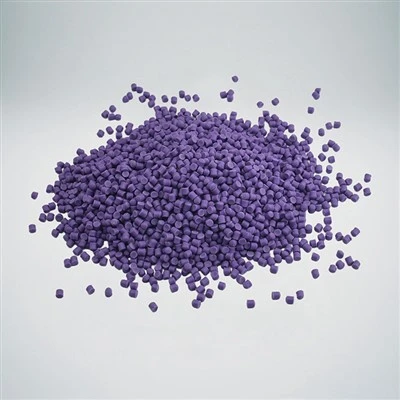
First off, let’s get the basics straight for anyone who doesn’t know what antifungal masterbatches are. They’re these concentrated pigment-additive blends we make, right? We mix the antifungal active ingredients with a carrier resin (usually polyolefins like PE or PP, which are super common for stationery) so they can get evenly mixed into plastic during manufacturing. No more spraying stuff after the fact—this is built right into the material itself. That’s key for stationery because it doesn’t rub off, doesn’t get washed away with hand sanitizer or rain, and it works for the entire lifecycle of the product.
Now, is this safe for stationery? I know a lot of brand owners get hung up on toxicity—especially when it’s for kids’ stationery, like crayons or lunchbox pencils. Let’s be real: no one wants their product to leach chemicals when a kid chews on a pencil eraser or licks a crayon. The antifungals we use are all third-party tested, BPA-free, phthalate-free, compliant with EU REACH, US FDA food contact standards, and even China’s GB 4806 for kids’ products. I can’t tell you how many times I’ve sent our test data to a client who was skeptical about that, and 9 times out of 10, that’s the push they needed to move forward. Last year we had a small stationery brand make custom pencil toppers and they were scared the antifungal would make the plastic brittle or discolor the bright pinks and blues they use for back-to-school. We adjusted the masterbatch blend to match their exact plastic resin, ran trials, and they got zero complaints about color fading or breakage. Win-win.
Wait, but does it actually work against the stuff that grows on stationery? Let’s talk about the real enemies here. Mold and mildew love damp, warm, dark spaces—perfect for a backpack after PE class or a desk drawer that doesn’t get air flow. We tested our masterbatches on typical stationery materials and common fungi: Aspergillus niger (that’s the black spot mold you see on old bread or erasers), Penicillium (the blue/green fuzzy stuff), and even some yeasts that cause that musty smell. ASTM G21 testing says our stuff prevents 99.9% of fungal growth on the surface of the plastic for up to 5 years. That’s way longer than the average stationery product lasts, right? And it doesn’t just mask the smell—kills the spores before they can even take root. I’ve seen photos from clients: old pencil cases with our masterbatch vs. ones without. The without ones had fuzzy black spots along the zipper and base; the with ones? Completely spotless after 12 months of use in a high schooler’s backpack.
Now, let’s break down the specific stationery products where this works best, because not every product needs the same level of antifungal protection. First up: pencil cases and storage boxes. These are semi-enclosed, get tossed around, sweat gets inside, so they’re prime real estate for mold. Adding our masterbatch to the PE or PP used for the case wall fabric or hard plastic shell means no more musty smell when you unzip it in the middle of a term paper cram session. Then erasers—oh man, erasers are the worst. They get chewed on, rubbed all over paper, pick up dust and hand oils, and if they’re stored in a warm desk, they turn black and crusty after a month. We had a client who made kneaded erasers for art students, and they were having such high return rates for moldy erasers that they almost dropped the line. Adding a small percentage of our masterbatch (only 2-3% by weight, no weird smell added) cut their return rate by 80% in 2 months. That’s huge for their bottom line.
Crayons and colored pencils, especially those sold for toddlers, are another big one. Toddlers put everything in their mouths, so you can’t have any random additives. Our masterbatch is formulated with natural-derived antifungals too, for brands that care about sustainable or “clean label” products. We work with a few small batch art supply brands that make vegan crayons, and they’ve been using our stuff for over a year now—no regulatory issues, no complaints from parents about weird tastes or smells. Even mechanical pencil grips! The rubber grips on pens and mechanical pencils get sweaty when you hold them for long periods, so mold loves to grow there. Adding our masterbatch to the thermoplastic elastomer (TPE) used for grips keeps that area clean, which is small but makes a big difference for how long the pen lasts.
Wait, I know what some of you are thinking: “Will this mess with the printing or the feel of the product?” That’s a totally valid question. When we make masterbatches, we tailor the concentration and carrier to the specific resin a client uses. For example, if someone’s making a hard plastic pencil case using PP, we use a PP carrier masterbatch so it blends evenly, no streaks, no discoloration. We also do test runs for every client—send them a small sample of their exact product mixed with our masterbatch, so they can test the feel, the color, how it prints on top, everything. Most clients are surprised how minimal the impact is: we usually only recommend 2-5% by weight of the masterbatch, which is such a small amount you can barely tell. A few clients even said the erasers felt more supple after adding it, which was a nice bonus.
Is there any downside? Let’s be honest, nothing is perfect. The biggest thing is that if you mix the wrong masterbatch with the wrong resin, you can get issues like brittleness or color shift—but that’s why we don’t just send a bag of generic antifungal masterbatch and tell you to go nuts. We work with every client to match their exact material, test it before full production, and tweak as needed. Also, antifungal masterbatch isn’t for every stationery product. If you’re making a disposable notebook that gets used once and thrown away, there’s no point in adding it. But for products that people use for months or years—pencil cases, erasers, pen grips, storage organizers—it’s a game-changer.
Let me throw in a real example to make this concrete. Last year, we worked with a mid-sized stationery brand that sells back-to-school kits for K-6. Their kits included a pencil case, 2 pencils, an eraser, and a ruler. They were getting tons of feedback from parents that after 2 weeks in a kid’s backpack, the eraser was moldy and the pencil case smelled. They tried a spray-on antifungal, but it rubbed off on kid’s hands and their homework, and it washed off after hand washing the case. We suggested adding our masterbatch just to the pencil case (PP) and eraser (NR rubber) — no need to add it to the ruler, since that’s hard plastic and doesn’t trap moisture as much. They did a 10,000-unit test run, sold that as a “germ-free back-to-school kit,” and their parent reviews went up 2 full stars on Amazon in 2 months. They ordered 50,000 more units for the next quarter. That’s not just a random sale—that’s a product actually solving a real problem for consumers.
Another thing to keep in mind: regulatory stuff is getting tighter for stationery, especially for kids. The EU recently updated their toy safety standards to include more requirements for microbial growth in products designed for children under 14. US CPSC is also starting to look at this too. Adding antifungal masterbatch isn’t just a nice feature anymore—it’s a way to future-proof your products so you don’t have to do a costly rework down the line. Our masterbatches are all pre-tested to meet all the latest standards, so you don’t have to spend time and money on extra third-party testing. That’s a huge plus for small brands that don’t have big R&D budgets.
Wait, what about sustainability? I know a lot of stationery brands are pushing for more eco-friendly products these days. Our antifungal masterbatches are compatible with recycled plastics too. A client who uses 100% recycled PET for their pencil cases was worried that adding antifungal would affect the recyclability. We ran tests with their recycling partner, and they confirmed that the masterbatch doesn’t interfere with the recycling process at all—still 100% recyclable, same as before. That’s a big deal for brands that are trying to hit their sustainability goals without cutting corners on product quality.
At the end of the day, the whole point of stationery is that it’s reliable, right? You grab your pencil before a test, your eraser when you make a mistake, your pencil case when you head to class. If it’s covered in mold or smells like mildew, that’s not just annoying—it makes the product feel cheap, like it’s not built to last. Antifungal masterbatches aren’t some weird, untested chemical add-on. They’re a proven, practical solution that works for a ton of common stationery products, is safe for people (especially kids), compliant with all the rules, and actually solves a real problem that every stationery user has dealt with at some point.
If you’re a stationery brand owner, a product designer, or anyone who’s been dealing with moldy erasers and stinky pencil cases, I get it. You don’t want to waste time or money on something that doesn’t work, or that messes up your product’s look or feel. We’ve been working with stationery brands for years, tweaking masterbatches to fit their exact needs, running test runs, and making sure every client gets a product that fits their brand. If you’re curious about testing a sample for your next line, just reach out. No pressure, no sales pitch that feels like a hard sell—we’ll walk you through the process, share our test data, and make sure you know exactly what you’re getting before you commit. Because at the end of the day, we’re all here to make better stationery that people can actually use without worrying about gross mold or bad smells.
References
Cross-Linked LSZH Cable Compounds ASTM G21 Standard Practice for Determining Resistance of Synthetic Polymeric Materials to Fungi
EU REACH Regulation (EC) No 1907/2006 Concerning the Registration, Evaluation, Authorization and Restriction of Chemicals
U.S. FDA 21 CFR Part 177 Indirect Food Additives: Polymers
GB 4806.7-2016 National Food Safety Standard for Plastic Materials and Articles in Contact with Food
Opta New Materials (Jiangsu) Co., Ltd.
As one of the most professional antifungal masterbatches manufacturers and suppliers in China, we also support customized service. We warmly welcome you to buy bulk durable antifungal masterbatches from our factory. If you have any enquiry about free sample, please feel free to email us.
Address: No.80, Jingang Avenue, Zhenjiang New Area, Zhenjiang City, Jiangsu Province, China.
E-mail: le.yin@optachem.com
WebSite: https://www.optanewmaterials.com/
