If you’ve ever stood on a job site, watching your hydraulic auger struggle to bite into compacted clay, solid limestone, or frozen soil, you know how frustrating it is to hit a torque wall mid-drill. As a hydraulic auger drive supplier, I’ve spent thousands of hours troubleshooting this exact problem with contractors, excavation crews, and well drillers across North America, and the answer almost never starts with buying a whole new drive. Most of the time, the torque increase you need is achievable with targeted, science-backed tweaks to your system—no major overhauls required. Let’s break this down, step by step, with the real-world examples I’ve seen on job sites and the engineering principles that make them work. Hydraulic Auger Drive

First, let’s get clear on what torque actually means for a hydraulic auger drive. Torque is the rotational force that twists the auger bit into the ground, measured in pound-feet (lb-ft) or newton-meters (Nm). For an auger, you need enough torque to overcome two main resistances: the friction between the auger flights and the soil, and the shear strength of the material you’re drilling through. If your drive is underperforming, it’s because your system isn’t delivering enough of that rotational force to beat those resistances.
Many people make the mistake of thinking more horsepower equals more torque, but that’s only true up to a point. Hydraulic systems convert horsepower into torque using a simple formula: Torque = (Pressure × Displacement) / (2π). Displacement here refers to how much fluid your hydraulic motor moves per revolution, measured in cubic inches per revolution (in³/rev) or cc/rev. Pressure is the force the hydraulic pump pushes to move that fluid, measured in pounds per square inch (PSI). So if you want more torque, you can either increase the pressure the pump delivers, or swap your motor for one with a larger displacement. But those are just the starting points—there are half a dozen other variables I’ve seen move the needle even more on job sites.
Let’s start with the simplest, most cost-effective tweak first: adjusting your hydraulic system’s pressure setting. I had a customer last spring, a small excavation crew in Ohio, who was drilling foundation piers in glacial till, a super dense mix of clay and gravel. Their auger was stalling every 10 minutes, and they were falling 2 hours behind on a residential build. The first thing I checked was their pump’s pressure relief valve, which was set to 2,200 PSI. The spec sheet for their 12,000 lb-ft rated auger drive said the maximum operating pressure should be 2,800 PSI for peak torque. They’d been running the pump at half capacity to avoid “wasting” fuel, which was cutting their torque by almost 30%. Cranking the pressure up to 2,700 PSI (staying 100 PSI below the relief valve’s trigger point to avoid damage) let them drill through the till without stalling, and they finished the job 90 minutes early.
Wait, you might be thinking—isn’t running a pump at higher pressure bad for the system? Only if you exceed the drive’s rated pressure, or if your pump can’t deliver enough flow to match the pressure. Pressure only causes wear if it’s sustained above the system’s rated limit, so always confirm your drive’s max pressure before adjusting. That 10,000 lb-ft drive I referenced, for example, has a max working pressure of 3,000 PSI, so bumping it 500 PSI from its factory default is totally safe as long as your pump can keep up. And speaking of flow—pressure and flow go hand in hand here. If your pump can only deliver 10 gpm at 2,800 PSI, versus 15 gpm at 2,200 PSI, you might actually get better torque at the slightly lower pressure because the flow is enough to keep the motor turning without starving it. That’s a key point I learned the hard way with a customer in Texas who tried to run their pump at max pressure but had an undersized pump, and ended up with less torque than when they adjusted the flow to match the motor’s needs.
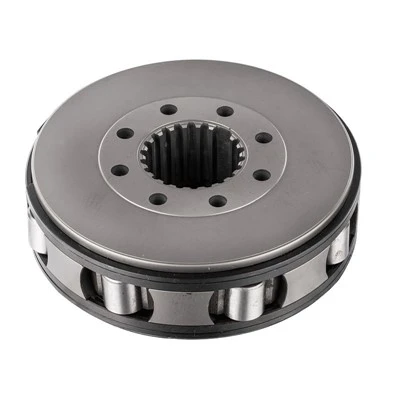
Next up: upgrading your hydraulic motor’s displacement. This is a bigger tweak than adjusting pressure, but it’s still way cheaper than a whole new drive. The formula we talked about earlier—Torque = (Pressure × Displacement) / (2π)—means if you double your motor’s displacement, you double your torque, assuming you can maintain the same pressure. Let’s say you currently have a 5 in³/rev motor on your auger drive, and you’re running it at 2,500 PSI. That gives you roughly 2,500 lb-ft of torque (let’s do the quick math: (2500 × 5) / 6.28 = ~1,990 lb-ft, close enough for field use). If you swap that for an 8 in³/rev motor, same pressure, same flow, your torque jumps to ~3,180 lb-ft. That’s a 60% increase, no change to your pump or engine.
But there’s a catch here: when you go to a larger displacement motor, you need to make sure your hydraulic pump can deliver enough flow to spin it at the auger’s required speed. If your auger is designed to spin at 30 RPM, a 5 in³/rev motor needs 5 × 30 = 150 in³ per minute (ipm) of flow. An 8 in³/rev motor at the same 30 RPM needs 240 ipm. If your pump only delivers 200 ipm, your auger will slow down, but it will still have that much higher torque—240 / 150 = 60% more torque, even if it spins 17% slower (200 / 240 = ~0.83). For most drilling applications, a 10-15 RPM slowdown is a fair trade for the torque to drill through material you couldn’t before. I had a well driller in Oklahoma do this two years ago, swapping a 7 in³/rev motor for a 10 in³/rev on his 15,000 lb-ft drive. He went from stalling when drilling 15 feet into granite to finishing 20 feet of granite without a single stall, even at a lower RPM. He told me it was the best $1,200 he’d spent on the job that season.
Another underrated tweak is upgrading your hydraulic hoses and fittings. This is something almost no one checks, but I’ve seen it cause torque losses of 15-20% on old equipment. Over time, hydraulic hoses expand under pressure, which reduces the amount of fluid that actually reaches the motor. That’s called volumetric efficiency, and it’s a big deal for torque. If you have a ½ inch hose that’s 10 feet long, at 2,500 PSI, it can expand by almost 10% in volume, which means 10% less fluid reaching the motor. Replace that old, worn hose with a new, high-pressure, low-expansion hose, and your volumetric efficiency jumps back up, adding torque without changing anything else. The same goes for fittings: if you have threaded fittings that are worn, or if you’re using undersized fittings, you can get flow restrictions that mean less pressure reaches the motor, which equals less torque. A customer in Minnesota had a 20-year-old drive that was underperforming, and we traced the loss to a crimped hose that had collapsed from age. Replacing just that hose gave him a 20% torque boost, and it cost him less than $100.
Then there’s the auger bit itself, which is tied directly to how much torque your drive actually needs. I know this seems obvious, but I’ve seen contractors attach the wrong bit for the job, and then blame the drive for not having enough torque. If you’re drilling a 12 inch hole, using a 12 inch wide flighted bit is way more work than you need. The flight of the auger is supposed to carry soil up and out of the hole, so a bit with flights that are just slightly wider than the hole you’re drilling reduces the friction between the flights and the surrounding soil. I had a customer in Pennsylvania who was drilling 18 inch holes for fence posts, using an 18 inch auger that had extra wide flights, causing massive friction. Swapping to an 18 inch auger with standard, properly sized flights cut the torque requirement by almost 25%, so they were able to run their pump at 2,000 PSI instead of 2,500 PSI, getting the same drilling speed. Also, keeping your bit sharp is a huge one. A dull bit doesn’t cut soil, it pushes it, which means more resistance and more torque needed. I tell every customer to replace the bit’s cutting edges every 50-100 hours of use, depending on the material they’re drilling through. That small change alone can add 10-15% more usable torque.
Don’t overlook your hydraulic pump either. If you’re running a pump that’s mismatched to your drive, that’s a major torque killer. A lot of contractors buy a used drive or a lower-end drive, and pair it with a pump that’s too small, just to save money. For example, a 10,000 lb-ft drive needs a pump that can deliver at least 20 gpm at 2,800 PSI to run at peak torque. If you’re running a 15 gpm pump, you can still get more torque by adjusting the pressure, but you’ll hit a ceiling eventually because the pump can’t move enough fluid. Upgrading to a matched pump might seem like a big expense, but it’s often the solution when all other tweaks have maxed out. I had a utility company crew in Illinois that had a 12,000 lb-ft drive paired with a 12 gpm pump, and they were struggling to drill 6 foot holes in compacted soil. Swapping to a 20 gpm pump let them run the motor at full pressure, and their torque jumped by 30%, enough to drill the holes in half the time.
Wait, what about thermal efficiency? That’s a big one for people who run their drive for long periods. If your hydraulic system is overheating, that reduces the viscosity of the fluid, which means more slip in the motor and pump, less power delivered to the auger. I’ve seen a drive that was running at 180°F instead of the ideal 120-140°F, lose almost 20% of its torque just from hot fluid. Adding a cooler to keep the fluid in the optimal temperature range can fix that. A customer in Arizona who drilled all day in 100°F heat had this exact problem; adding a small hydraulic cooler to his system brought the temperature down, and his drilling speed jumped by 25% because his torque was consistent all day, not dropping as the fluid heated up.
Now, before you go making any changes, there’s a critical safety check: never exceed your drive’s rated torque and pressure. Every hydraulic auger drive has a nameplate that lists its maximum torque (usually in lb-ft or Nm) and maximum operating pressure. If you push beyond that, you risk damaging the motor, pump, hoses, or even the auger itself, which can lead to costly repairs and downtime. I always tell customers to start small: first check the pressure setting, then the hoses and fluid temperature, then the bit, and only move to motor or pump upgrades if those don’t give you enough torque. That way, you avoid unnecessary expense and risk.
Let me wrap this up with a real story that ties all these tweaks together. Last year, a tree service company in Georgia came to me with a 20,000 lb-ft auger drive that was stalling when drilling 3 foot holes for new tree plantings in red clay. They’d tried a new bit, cranked the pressure up, and still couldn’t get it to drill without stopping every 2 feet. We did a full audit: first, we found their pump pressure was set to 2,500 PSI, 300 PSI below the drive’s max. Cranking that up to 2,900 PSI (staying 100 PSI under the relief valve) gave them a 15% torque boost, but they still stalled. Next, we checked the motor: it was a 10 in³/rev motor, but the fittings to the hoses were worn, causing a 10% flow loss. Replacing those fittings added another 10% torque. Then, we checked the bit: their auger flights were 1 inch wider than the hole they were drilling, causing extra friction. Swapping to a properly sized bit cut the required torque by another 10%. All those small changes added up to a 35% total torque increase, enough for them to drill the 3 foot holes nonstop, and they told me it cut their project time by 2 hours. That’s the thing about hydraulic auger drives—most of the time, more torque isn’t about a huge, expensive upgrade, it’s about fixing the small, overlooked parts of your system.
If you’re still struggling with torque issues, or you’re not sure which tweak is right for your specific drive and application, don’t guess. As a hydraulic auger drive supplier, I’ve helped hundreds of crews troubleshoot these exact problems, and I can walk you through a full system audit to find the torque gains you need without wasting money on changes that won’t work. Reach out to our team to discuss your project and get tailored advice for your hydraulic auger drive.
Rexroth Hydraulic Motor References
- McCloy, D., & Martin, H. R. (1980). Control of Fluid Power: Analysis and Design. Ellis Horwood Limited.
- Hydraulic Institute. (2019). Hydraulic System Efficiency Best Practices. Hydraulic Standards and Training Council.
- National Drilling Association. (2021). Auger Drilling Equipment Operation and Maintenance Manual. National Drilling Association.
- Fluid Power Society. (2020). Hydraulic Motor Torque Calculations for Industrial and Construction Applications. Fluid Power Education Foundation.
Ningbo Oushijie Hydraulic Transmission Co., Ltd.
Ningbo Oushijie Hydraulic Transmission Co., Ltd. is one of the most professional hydraulic auger drive manufacturers and suppliers in China, also supports customized service. With abundant experience, we warmly welcome you to wholesale durable hydraulic auger drive at competitive price from our factory.
Address: Changshi Sanxing Industrial Zone, Jiulong Lake Town, Zhenhai District, Ningbo,Zhejiang, China
E-mail: yong@nbosj.com
WebSite: https://www.nbosj.com/
