If you’ve ever called our team here at [Pure Water System Supplier] asking, “Can your systems actually take heavy metals out of our water?” I get it—this isn’t a trivial question. Heavy metal contamination in drinking water isn’t just a local news story or a distant environmental scare; it’s a tangible, daily concern for families, small manufacturers, schools, and rural communities that rely on well or municipal water systems. Last quarter, we worked with a 120-student elementary school in Western Pennsylvania that noticed elevated lead levels in its after-school program’s tap water. The district had tried basic carbon filters before, only to find lead creeping back within six months. That’s the frustration: not all water treatment is equal, and many standard systems fall short when it comes to heavy metals. Today, I want to walk through what heavy metals actually do in water, how pure water systems target them, what works, what doesn’t, and why our team’s approach has solved that exact problem for dozens of similar clients. Pure Water System
First, let’s cut through the “heavy metal” label to ground this in real science. The metals we care about in drinking water—lead, arsenic, cadmium, mercury, chromium—are all naturally occurring or human-made (from old lead pipes, industrial runoff, agricultural fertilizers, or even corroded plumbing fixtures) and are toxic even in tiny amounts. The EPA sets enforceable limits for these: 15 parts per billion (ppb) for lead, 10 ppb for arsenic, 5 ppb for chromium (VI), and so on. The risk? Chronic low-level exposure can lead to developmental delays in kids, kidney damage, neurological issues, and even increased cancer risk over time. That’s why removal isn’t just a “nice-to-have”—it’s a non-negotiable for safe, usable drinking water.
Now, here’s where a lot of misinformation creeps in: if you ask Google “can water systems remove heavy metals,” you’ll get a mix of vague claims and conflicting advice. Let’s be clear: most standard water filters—like the countertop carbon pitchers many people keep by their kitchen sink—are not designed to reliably remove heavy metals. Carbon works great for chlorine, bad tastes, and odors, but its tiny pores can’t trap dissolved heavy metal ions. A 2022 study from the Water Quality Association (WQA) tested 15 popular countertop pitchers and found that only 2 of them reduced lead by more than 50% after 100 gallons of use, and none kept up with arsenic levels. That’s not a knock on pitchers—they’re for quick, minor taste improvements, not long-term heavy metal remediation.
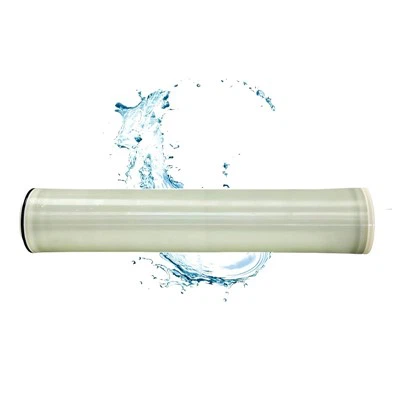
So what does work? It boils down to two core pure water system technologies that our team specializes in: reverse osmosis (RO) and electrodeionization (EDI), paired with tailored pre-filtration steps that handle specific metal types. Let’s break each down simply, no jargon. Reverse osmosis is the workhorse here. RO systems use a semipermeable membrane—think of it as a super-fine mesh with pores 1,000 times smaller than a water molecule—to separate dissolved contaminants from pure water. Heavy metal ions, which have a higher molecular weight and charge, can’t pass through that membrane. In the Pennsylvania elementary school case, we installed an RO system on every kitchen and classroom tap. Six months later, their third-party test showed lead levels at 2 ppb—well below the EPA limit—with no signs of breakthrough.
But RO isn’t one-size-fits-all. For clients dealing with arsenic, which is often in its arsenate form in well water, RO works, but we add a pre-treatment step of activated alumina (AA) before the RO membrane. Arsenate binds to the porous AA media, getting trapped before it ever reaches the RO. We also adjust the system’s pH balance slightly (to a neutral 7-7.5) because very acidic or alkaline water can reduce RO efficiency for some metals. For chromium (VI), a common contaminant in groundwater near industrial sites, our team uses ion exchange pre-filters that swap the chromium ions for harmless sodium ions, then send the already-reduced-contaminant water to RO for an extra layer of protection. This layered approach is why our systems outperform single-technology setups.
Now, the elephant in the room: what about “heavy metal filters” you might see marketed online as a quick fix? A lot of these use something called ion exchange resins, which do work for some metals—but only if the water is free of other contaminants that clog or wear down the resin quickly. For example, if your water has high levels of calcium or magnesium (hard water), those minerals will compete with heavy metals for resin spots, meaning your filter will burn out in weeks instead of months, and heavy metals will start passing through long before that. We’ve had clients come to us after buying $200 ion exchange filter kits that stopped working in two months because their well water had 300 ppm of hardness. Our pure water systems include water softening pre-treatment for exactly that reason—removing hardness so the heavy metal-specific filters last longer and work reliably.
Another point to clarify: there’s no such thing as a “100% pure water system” that removes every last heavy metal, and anyone claiming otherwise is stretching the truth. Even RO systems have a tiny (less than 1%) “permeate” level of residual contaminants for most metals, and that’s perfectly safe under EPA guidelines. What matters is that our systems consistently reduce metals to levels well below regulatory limits, with certified testing to back it up. Every system we sell comes with a post-installation baseline test and quarterly free check-ins for the first year—something you won’t get from a random online retailer.
Let’s also address a common misconception about pure water systems for commercial or industrial use, not just residential. For small food and beverage manufacturers, heavy metals in process water can ruin product batches: a local craft brewery we partnered with in Ohio had consistent off-flavors in their IPA that traced back to cadmium in their municipal water. Their original system used RO, but we added a specialized heavy metal pre-filter for cadmium and adjusted the RO membrane to a higher rejection rate for transition metals like cadmium and mercury. Within a month, their flavor profile stabilized, and they passed their state’s food safety audit on the first try. For schools, hospitals, and even agricultural operations, heavy metal contamination isn’t a hidden cost—it’s a liability that can lead to fines, public health scares, or lost revenue.
Now, let’s talk about why our approach is different from other pure water system suppliers. We don’t sell a one-size-fits-all box. Last year, we worked with a small rural community in Vermont that had naturally elevated lead levels in its well water, plus high levels of iron that were clogging pipes. A national supplier quoted them a standard RO system that would require annual pre-filter replacements costing $1,200, with no guarantee it would handle the iron-lead combo. We designed a custom system: first, a sediment filter to catch large iron particles, then an iron oxidation filter to remove dissolved iron without chemicals, a heavy metal-specific ion exchange pre-filter, then the RO membrane, and finally a small carbon post-filter to restore a neutral taste. The total annual maintenance cost was $450, and their lead levels have stayed below 3 ppb for 18 months. That’s the kind of tailored solution we prioritize over generic products.
I know some clients worry about maintenance complexity or the cost of installing a pure water system. Here’s the reality: a well-maintained pure water system for a family of four or a small office will pay for itself in three to five years, especially when you factor in the cost of bottled water (which is often no better than filtered tap water, per WQA testing) and the peace of mind of not risking heavy metal exposure. For commercial clients, the ROI is even clearer: avoiding product rejects, regulatory fines, and the cost of replacing corroded pipes caused by heavy metal water.
At the end of the day, the question “Can a pure water system remove heavy metals?” has a clear answer: yes—but only if the system is designed specifically for heavy metal contaminants, paired with pre-treatment to address your unique water quality issues, and installed and maintained by a team that knows the science behind it. We’ve seen too many clients waste time and money on systems that sound good on paper but fail in real-world conditions, and that’s why we built our business on rigorous testing, custom designs, and transparent, fair pricing.
If you’re a homeowner wondering about your well water, a business owner worried about process water quality, or a community leader addressing local contamination, we can help. Our team will come to your site, test your water at no cost, walk you through exactly what’s in your water, what contaminants need to be removed, and a custom solution that fits your budget and needs. We don’t push products—we solve problems, and that starts with listening to what you’re actually dealing with.
You don’t have to take my word for it: our client testimonials page has more than 200 stories like the Pennsylvania elementary school and Vermont rural community. If you’re ready to stop guessing about your water quality and invest in a solution that works, reach out to our team for a water test and consultation. Heavy metal contamination is a solvable problem, and the right pure water system is the key to safe, reliable water for you, your family, or your community.
References
System Center Water Quality Association. (2022). Performance Testing of Residential Water Filters for Heavy Metal Removal. WQA Research Report Series.
U.S. Environmental Protection Agency. (2023). Drinking Water Contaminants: National Primary Drinking Water Regulations. EPA Office of Water.
American Water Works Association. (2021). Heavy Metal Remediation in Water Supplies: Best Practices for Treatment Systems. AWWA Water Research Foundation.
Hangzhou Nanoimp Environmental Technology Co., Ltd.
With abundant experience, we are one of the most professional pure water system manufacturers and suppliers in China. Welcome to wholesale high quality pure water system in stock here and get pricelist from our factory. We also accept customized orders.
Address: Road 25, Baiyang Street, Qiantang District, Hangzhou City, Zhejiang Province
E-mail: keith.wang@nano-sepmer.com
WebSite: https://www.nanoimp-membrane.com/
