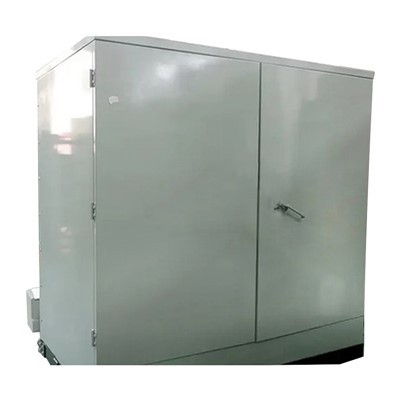
Hey there! I’m a supplier of Structural Transformers, and I know firsthand how crucial it is to optimize memory usage. In today’s tech – savvy world, where data is king and efficiency is everything, getting the most out of your Structural Transformers while using minimal memory is a game – changer. So, let’s dive into how we can optimize the memory usage of these amazing devices. Structural Transformer
Understanding the Basics
Before we start talking about optimization, let’s quickly go over what Structural Transformers are. They’re a type of neural network architecture that can handle complex structural data, like graphs and trees. They’ve been a real breakthrough in fields such as natural language processing, computer vision, and bioinformatics.
But here’s the deal: Structural Transformers can be memory hogs. They need a ton of memory to store all the intermediate results during computation. This can lead to slower processing times and higher costs, especially when you’re dealing with large – scale datasets.
Pruning Techniques
One of the most effective ways to optimize memory usage is through pruning. Pruning is all about removing the parts of the model that don’t contribute much to its performance. There are a couple of types of pruning we can look at.
Weight Pruning
Weight pruning is about getting rid of the small weights in the neural network. These small weights usually don’t have a significant impact on the model’s output. By removing them, we can reduce the number of parameters in the model, which in turn cuts down on memory usage.
For example, we can set a threshold for the weights. Any weight that’s smaller than this threshold gets removed. It’s like cleaning up your closet and getting rid of all the clothes you never wear. You’ll have more space for the stuff you actually need.
Neuron Pruning
Neuron pruning takes things a step further. Instead of just removing weights, we remove entire neurons from the network. This is a bit more complex because we need to make sure we’re not removing neurons that are important for the model’s performance.
We can do this by looking at the activation values of the neurons. Neurons with low activation values are less likely to be important, so we can remove them. It’s like shutting down the parts of a factory that aren’t really producing much.
Quantization
Another great way to optimize memory usage is quantization. Quantization is the process of reducing the precision of the numbers used in the model.
In a normal Structural Transformer, we usually use 32 – bit floating – point numbers to represent weights and activations. But these numbers take up a lot of memory. By using quantization, we can reduce the precision to 16 – bit or even 8 – bit numbers.
This doesn’t mean we’re sacrificing too much accuracy. In many cases, the model can still perform pretty well with lower – precision numbers. It’s like taking a high – resolution photo and reducing its quality a bit. You might lose some details, but the overall picture is still clear enough.
Memory – Efficient Attention Mechanisms
The attention mechanism is a key part of Structural Transformers, but it can also be a major memory consumer. There are a few ways to make the attention mechanism more memory – efficient.
Sparse Attention
Sparse attention is a technique where we only calculate the attention scores for a subset of the input elements. Instead of looking at every single element in the input sequence, we focus on the ones that are most relevant.
This can significantly reduce the memory usage because we’re not calculating and storing as many attention scores. It’s like looking for a needle in a haystack, but instead of searching the whole haystack, you just look in the areas where the needle is most likely to be.
Approximated Attention
Approximated attention is another option. Instead of calculating the exact attention scores, we use an approximation. There are different ways to do this, like using a low – rank approximation or a sampling method.
These approximations can be much faster and use less memory than calculating the exact scores. It’s like estimating the number of people in a stadium instead of counting each one individually.
Model Compression
Model compression is a broader term that includes techniques like pruning and quantization, but it also involves other methods to reduce the size of the model.
Knowledge Distillation
Knowledge distillation is a technique where we train a smaller, student model to mimic the behavior of a larger, teacher model. The teacher model is usually the original Structural Transformer, and the student model is a simpler version with fewer parameters.
By training the student model on the outputs of the teacher model, we can transfer the knowledge from the large model to the small one. This way, the student model can achieve similar performance with much less memory usage. It’s like having a mentor and a mentee, where the mentee learns all the good stuff from the mentor without having to be as big.
Caching and Reusing Intermediate Results
During the computation of a Structural Transformer, we often calculate the same intermediate results multiple times. By caching these results and reusing them, we can save a lot of memory and processing time.
For example, if we have a certain layer in the network that calculates some feature maps, we can cache these feature maps. The next time we need them, we don’t have to recalculate them from scratch. It’s like making a big batch of soup and then having leftovers for the next few days.
Real – World Benefits
Optimizing the memory usage of Structural Transformers has some serious real – world benefits. First of all, it can save you a ton of money on hardware. You won’t need as many high – memory servers to run your models, which means lower infrastructure costs.
Second, it improves the performance of your applications. With less memory pressure, your models can run faster, which is crucial in applications like real – time natural language processing or high – speed computer vision.
Finally, it makes it easier to deploy your models on devices with limited memory, like mobile phones or IoT devices. This opens up new possibilities for using Structural Transformers in a wider range of applications.
Contact for Procurement
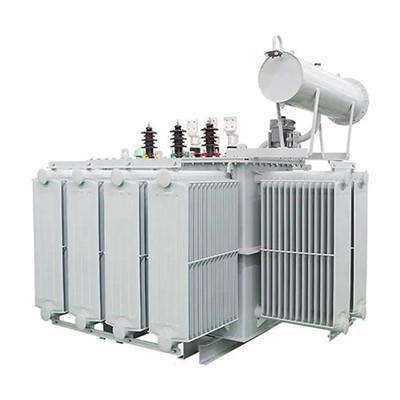
If you’re interested in learning more about how these optimization techniques can work for your specific needs, or if you’re looking to purchase our high – quality Structural Transformers, don’t hesitate to reach out. We’re here to help you get the most out of your models while keeping your memory usage in check.
References
Oil Immersed Transformer [1] Han, S., Pool, J., Tran, J., & Dally, W. (2015). Learning both weights and connections for efficient neural network. In Advances in neural information processing systems.
[2] Hubara, I., Courbariaux, M., Soudry, D., El-Yaniv, R., & Bengio, Y. (2016). Binarized neural networks: Training deep neural networks with weights and activations constrained to+ 1 or-1. arXiv preprint arXiv: 1602.02830.
[3] Vaswani, A., Shazeer, N., Parmar, N., Uszkoreit, J., Jones, L., Gomez, A. N., … & Polosukhin, I. (2017). Attention is all you need. In Advances in neural information processing systems.
Nantong Yawei New Energy Technology Co., Ltd.
As one of the most professional structural transformer manufacturers and suppliers in China, we’re featured by quality products and good service. Please rest assured to wholesale durable structural transformer made in China here from our factory. Customized orders are welcome.
Address: Room 28-101, Building 27 and 28, No.333 Kaiyuan Avenue, Sunzhuang Subdistrict, Hai’an City, Nantong City, Jiangsu Province, China
E-mail: admin@nantongyawei.com
WebSite: https://www.nantongyawei.com/
