Lab mining equipment plays a crucial role in various aspects of mining research, offering precise and controlled environments for studying different minerals. When it comes to zinc mining research, the question arises: Can lab mining equipment be effectively used? As a supplier of lab mining equipment, I’ve had the opportunity to witness firsthand how these tools contribute to zinc – related studies. Lab Mining Equipment
The Significance of Zinc Mining Research
Zinc is an essential metal with a wide range of applications. It is used in galvanizing steel to prevent corrosion, in the production of brass and bronze, and in the manufacturing of batteries. With the growing demand for zinc in various industries, there is a pressing need for more efficient and sustainable zinc mining techniques. Research in this area aims to improve ore extraction methods, enhance the recovery of zinc from low – grade ores, and minimize the environmental impact of mining operations.
How Lab Mining Equipment Facilitates Zinc Mining Research
Ore Characterization
One of the primary steps in zinc mining research is the characterization of zinc ores. Lab mining equipment, such as X – ray diffraction (XRD) and X – ray fluorescence (XRF) spectrometers, can accurately identify the mineral composition of zinc ores. XRD analyzes the crystal structure of minerals, allowing researchers to determine the specific zinc – bearing minerals present in the ore, such as sphalerite (ZnS), smithsonite (ZnCO₃), and hemimorphite (Zn₄Si₂O₇(OH)₂·H₂O). XRF, on the other hand, can quickly measure the elemental composition of the ore, providing information about the concentration of zinc and other associated elements.
For example, in a recent research project, a team used XRF to analyze a sample of zinc ore from a new deposit. The results showed that the ore had a relatively high zinc content but also contained significant amounts of iron and lead. This information was crucial for determining the most appropriate extraction method for the zinc ore.
Ore Processing Studies
Lab mining equipment is also invaluable for conducting ore processing studies. Crushers, grinders, and flotation cells are commonly used in the laboratory to simulate the industrial ore processing steps. Crushers can be used to reduce the size of the ore sample, making it easier to handle and further process. Grinders then reduce the ore particles to a finer size, increasing the surface area available for chemical reactions during extraction processes.
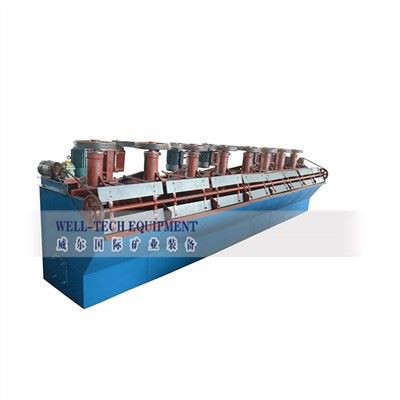
Flotation is a widely used method for separating zinc minerals from other gangue minerals. In the laboratory, flotation cells can be used to test different flotation reagents and conditions to optimize the recovery of zinc. For instance, researchers can vary the pH of the flotation pulp, the type and dosage of collectors and frothers, and the agitation speed to find the most effective combination for zinc extraction.
Leaching Experiments
Leaching is another important process in zinc mining, especially for low – grade ores or complex zinc deposits. Lab mining equipment can be used to conduct leaching experiments under controlled conditions. Reactors equipped with temperature and pH controls can be used to study the leaching kinetics of zinc ores using different leaching agents, such as sulfuric acid, hydrochloric acid, or ammonia.
By carefully controlling the experimental conditions in the laboratory, researchers can determine the optimal leaching parameters, such as the leaching time, temperature, and reagent concentration. This information can then be scaled up for industrial applications, leading to more efficient and cost – effective zinc extraction processes.
Environmental Impact Assessment
In addition to ore processing and extraction studies, lab mining equipment can also be used for environmental impact assessment in zinc mining research. For example, water quality analyzers can be used to monitor the concentration of heavy metals, such as zinc, lead, and cadmium, in mine water and tailings. This helps researchers understand the potential environmental risks associated with zinc mining operations and develop strategies to mitigate these risks.
Limitations and Challenges
While lab mining equipment offers many advantages for zinc mining research, there are also some limitations and challenges. One of the main limitations is the scale of the experiments. Laboratory experiments are typically conducted on a small scale, and the results may not always be directly applicable to large – scale industrial operations. There may be differences in the behavior of the ore, the efficiency of the equipment, and the environmental conditions between the laboratory and the mine site.
Another challenge is the complexity of zinc ores. Zinc ores can vary significantly in their mineralogy, texture, and chemical composition, depending on the deposit location. This means that the results obtained from one ore sample may not be representative of other zinc ores. Therefore, multiple samples from different deposits need to be analyzed to ensure the reliability and generality of the research results.
Overcoming the Limitations
Despite these limitations, there are ways to overcome them. To address the scale – up issue, researchers can use pilot – scale plants that are intermediate between laboratory and industrial scales. Pilot – scale experiments can provide more realistic data and help bridge the gap between laboratory research and industrial applications.
To deal with the complexity of zinc ores, a comprehensive approach that includes multiple analytical techniques and a large number of ore samples should be adopted. By combining different methods of ore characterization, processing, and environmental assessment, researchers can obtain a more complete understanding of zinc ores and develop more effective mining and processing strategies.
Conclusion: The Future of Lab Mining Equipment in Zinc Mining Research
In conclusion, lab mining equipment can indeed be effectively used for zinc mining research. It provides researchers with the tools to accurately characterize zinc ores, optimize ore processing and extraction methods, and assess the environmental impact of zinc mining operations. Although there are some limitations and challenges, with the right approach, these can be overcome.

As a supplier of lab mining equipment, I am committed to providing high – quality products that meet the needs of researchers in the zinc mining industry. Our range of equipment includes state – of – the – art XRD and XRF spectrometers, crushers, grinders, flotation cells, and reactors. These tools are designed to be precise, reliable, and easy to use, enabling researchers to conduct their studies with confidence.
Magnetic Separator and Electrostatic Separator Equipment If you are involved in zinc mining research and are looking for reliable lab mining equipment, I encourage you to get in touch with us. We can provide you with detailed product information, technical support, and help you choose the most suitable equipment for your research needs. Contact us to start a discussion about how our lab mining equipment can contribute to your zinc mining research projects.
References
- Dunn, P. J., & Walton, A. J. (Eds.). (2007). The Eco – friendly Synthesis of Fine Chemicals. Wiley – VCH.
- Somasundaran, P. (Ed.). (2006). Froth Flotation: A Century of Innovation. Elsevier.
- Habashi, F. (2006). Handbook of Extractive Metallurgy, Volume II: Lead, Zinc, Copper. Wiley – VCH.
Jiangxi Well-tech International Mining Equipment Co., Ltd.
Jiangxi Well-tech International Mining Equipment Co., Ltd. is one of the most professional lab mining equipment manufacturers and suppliers in China, featured by quality products and good service. Please rest assured to wholesale customized lab mining equipment at competitive price from our factory.
Address: Guzhang Industrial Park of Shicheng County, Ganzhou City, Jiangxi Province, China
E-mail: mily@benefication.com
WebSite: https://www.cn-welltech.com/
